#8 Kodak Portrait
When you hold it in your hand, you can’t shake the feeling that despite its impressive 30.5 cm focal length, something still seems suspiciously absent. It gives off the vibe of being cobbled together by some ancient craftsman using a toilet paper roll and grandma’s reading magnifier. Still, folk wisdom stands: never judge a lens by how few optical elements it has.
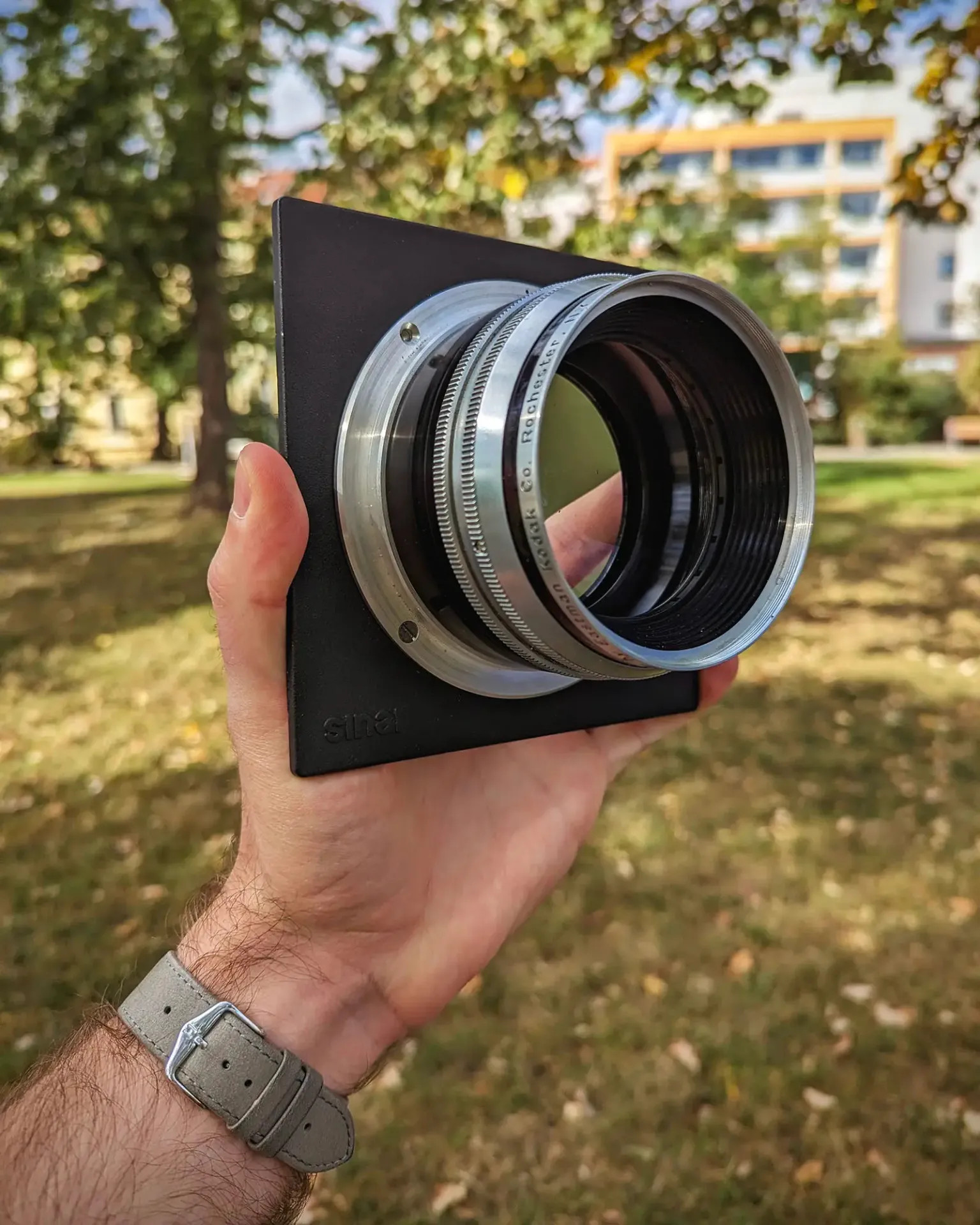
We learned what are those pictorialisms in my previous article here. However, among all the confusion about knee menisci, the fact that I like it soft and where one can legally apply vaseline, the key information got lost: what started all this, who the hell is the cornerstone around which the temple of my photographic ingenuity has been built. Well, it came like a bolt from the blue and it was nobody else but Mr. Portrait Kodak 305mm f4.5 himself.
The design is anything but standard. At the back sits a meniscus element (see below), in front of it an aperture and that's it. To the uninitiated, the lens looks incomplete, like someone forgot to install the front group. The downside is the blades, tricky little metal fuckers, mechanically unprotected from the harsh world around (which is the same with glass, well, that's what we have caps and filters for). The upside is that the lens body and even the blades themselves act as a lenshood for the rear element so you don't need to mount anything else.
Besides the barrel version (no shutter), there's also a shuttered variant in an Ilex Universal No. 5 Synchro, limited to a slightly slower f4.8 because the shutter opening just isn't big enough for full speed. There's also a rarer, longer sibling, the Kodak Portrait 405mm f4.5, found only in shutterless form.
Only a few lenses have the same glass-aperture tandem, for example Pinkham & Smith, Wollaston, Spencer, Kalosat or the ultra-mega-rare and unattainable Struss. The winter and long evenings are coming, spend them with this excellent three-part epic article about SF lenses here, here and here.
- The meniscus lens consists of a single element with a maximum of two cemented elements. The simpler is just a pinhole camera. You can get a basic overview here. This design is used for various purposes in different fields—mainly microscopy, astronomy, sensors or medical optics. In photography, however, these lenses are often known for their relaxed photographic morals that would make members of the f/64 group really, really mad.
If such lenses do have an aperture, stopping down regulates the degree of softness and sharpness in the image. By stopping down, however, you cold-bloodedly murder the lens's character, and it becomes irrelevant which one you're using. More on the different types of correction here. This type of design was especially popular in old landscape lenses or early soft-focus schemes, which often achieved their effect (whether intentionally or not) through chromatic aberration (the less desirable bastard child of aberrations) or in tandem with spherical aberration.
Yes, I also had a dark (sharp?) ages when I blew my nose in disdain over soft photos as "stupidly focused photos where the photographer was as blind as a bat." Well, let it serve me right for looking down on my younger self.
I had been flirting with soft output even before that, furiously twisting the rear elements of my Dallmaer and trying to coax some life out of my ultra-mega-rare Crown (h̶̶̶̶̶̶̶a̶̶̶̶̶̶̶,̶̶̶̶̶̶̶ ̶̶̶̶̶̶̶n̶̶̶̶̶̶̶o̶̶̶̶̶̶̶t̶̶̶̶̶̶̶h̶̶̶̶̶̶̶i̶̶̶̶̶̶̶n̶̶̶̶̶̶̶g̶̶̶̶̶̶̶ ̶̶̶̶̶̶̶t̶̶̶̶̶̶̶o̶̶̶̶̶̶̶ ̶̶̶̶̶̶̶s̶̶̶̶̶̶̶e̶̶̶̶̶̶̶e̶̶̶̶̶̶̶ ̶̶̶̶̶̶̶h̶̶̶̶̶̶̶e̶̶̶̶̶̶̶r̶̶̶̶̶̶̶e̶̶̶̶̶̶̶!̶̶̶̶̶̶̶ ̶̶̶̶̶̶̶M̶̶̶̶̶̶̶a̶̶̶̶̶̶̶y̶̶̶̶̶̶̶b̶̶̶̶̶̶̶e̶̶̶̶̶̶̶ ̶̶̶̶̶̶̶o̶̶̶̶̶̶̶n̶̶̶̶̶̶̶e̶̶̶̶̶̶̶ ̶̶̶̶̶̶̶d̶̶̶̶̶̶̶a̶̶̶̶̶̶̶y̶̶̶̶̶̶̶ ̶̶̶̶̶̶̶I̶̶̶̶̶̶̶'̶̶̶̶̶̶̶l̶̶̶̶̶̶̶l̶̶̶̶̶̶̶ ̶̶̶̶̶̶̶w̶̶̶̶̶̶̶r̶̶̶̶̶̶̶i̶̶̶̶̶̶̶t̶̶̶̶̶̶̶e̶̶̶̶̶̶̶ ̶̶̶̶̶̶̶a̶̶̶̶̶̶̶n̶ ̶a̶r̶t̶i̶c̶l̶e̶.̶ And I did!) Compared to the Kodak, though, these are still very restrained SF lenses, even at their maximum SF setting. It was the Kodak that finally showed me what real pictorialism looks like and how much I had been missing thanks to my own inflated ego. Yes, I also had a dark (sharp?) ages when I blew my nose in disdain over soft photos as "stupidly focused photos where the photographer was as blind as a bat." Well, let it serve me right for looking down on my younger self.
Mister Kodak achieves the desired effect through the more noble variety of aberration: spherical. It's still an optical flaw, of course; an error of the lens. Light rays passing through different parts of the glass focus at different points. A spherical surface bends rays hitting the edges differently from those marching through the center. But! In a world where everything is dreamy and soft, this actually becomes an advantage, which you can see in the photos above—a kind of magic where the edges stay sharp, but a luminous halo spreads around them, soft like butter in August. Unlike chromatic aberration, spherical is monochromatic, so it doesn't even bother your life with colors. Spectacular! But more about this another time.
The lens has a downright wild rendering in backlight, full of bubbles and, with the right background, even a proper swirl effect. It handles overexposed scenes surprisingly well; strong contrasts between light and shadow and direct backlight push its shallow depth of field to the foreground and amplify that fantastical glow. Everything else is ethereal, creamy, dreamily overexposed—a true flag bearer of its breed. The lens comfortably covers 8x10" (the 405mm version sits a tier above), though sharpness and overall image cohesion fall off noticeably toward the edges. If that rubs you the wrong way (lily-livered!!), place your subject closer to the center or use the lens on 5x7" (and the 405mm on 8x10"). This works especially well for head-and-shoulders portraits where the longer focal length comes into play.
Portraiture is, if you wouldn't have guessed it from the name, the powerful aspect of Kodak. He wasn't one of the favorite portrait lenses of old Hollywood for no reason - the soft touch smoothed out the lines and made the young ones shine. In this case just keep the lighting subtle and gentle.
But whatever—be hard on yourself and shoot soft. Careful though, you might end up liking it and then there's no turning back. Because One Kodak to rule them all, one Kodak to find them, one Kodak to bring them all and in the softness bind them.